
Match the cable to the route
Each cut-away below shows how the cable is built. Choose by where it runs and how you plan to grow the network.
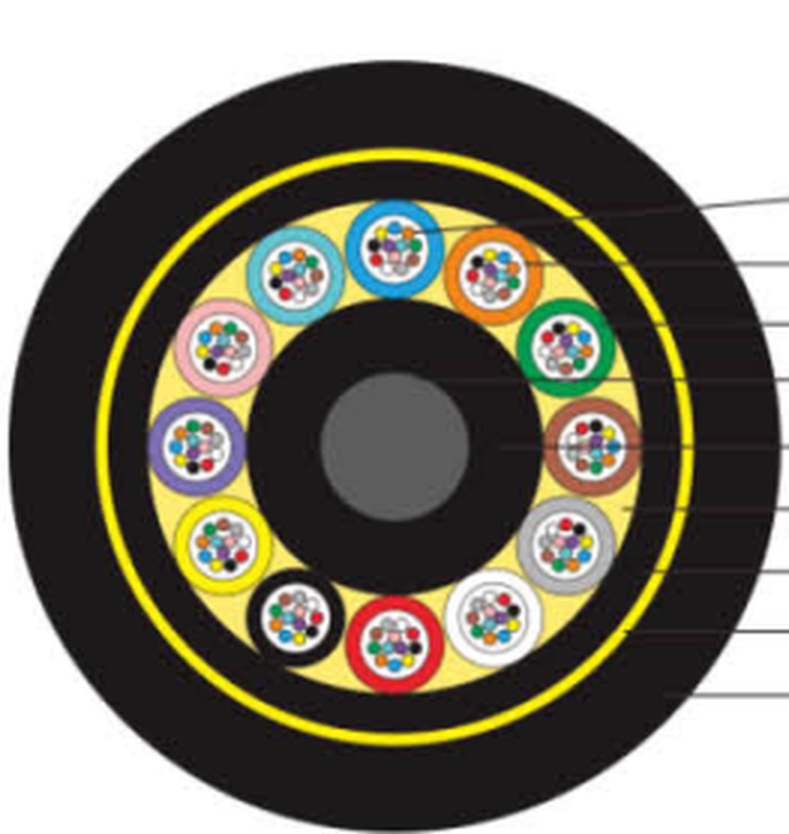
ADSS — All-Dielectric Self-Supporting
Aerial spans without the messenger wire. The fiber rides on a dielectric strength member instead of a steel sling, so there is nothing to bond to the pole and nothing to rust. Reaches 12–144 fibers over 100–400 m spans — the workhorse for neighborhood feeder runs.
- Optical fiber
- Loose tube
- Tube filling compound
- Central strength member
- Aramid yarn
- Inner sheath
- Water-blocking material
- PE outer sheath
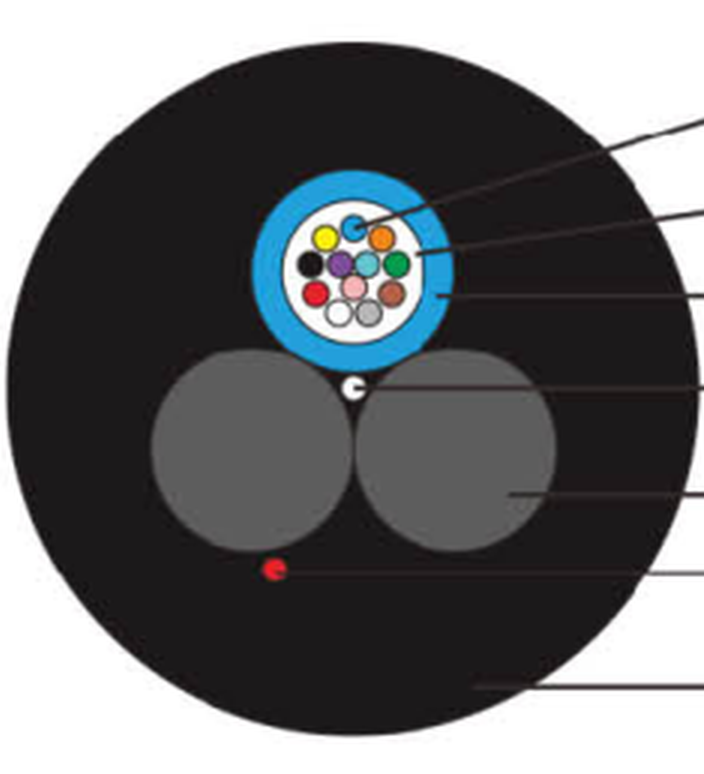
ASU (ADSS 0+3)
A slim self-supporting drop that pairs three steel strength wires with a single loose tube. Light enough to run by hand between poles and buildings, which makes short-span subscriber drops fast, inexpensive and easy to tension.
- Optical fiber
- Loose tube
- Filling compound
- 3 × steel strength wires
- PE sheath
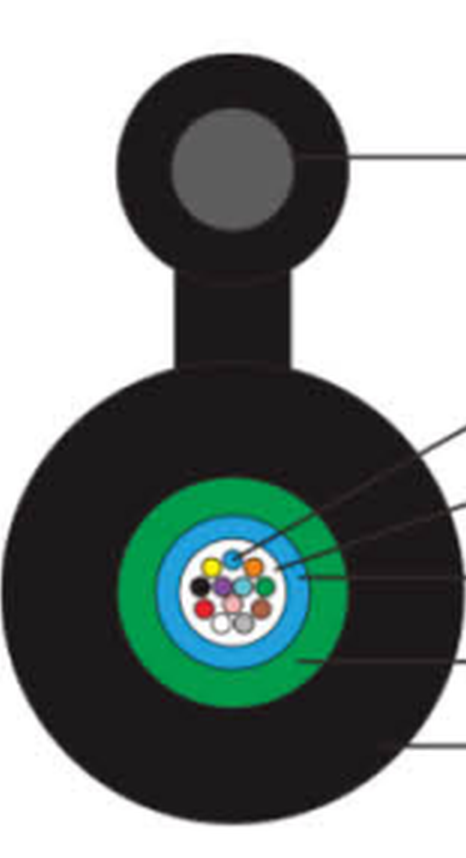
GYXTC8S Figure-8
A figure-8 construction that fuses the optical unit and a steel messenger into one jacket. Crews install it in a single pass along aerial access routes, and the messenger carries the mechanical load so the fiber core never has to.
- Central loose tube
- Optical fiber
- Filling compound
- Steel messenger
- PE sheath
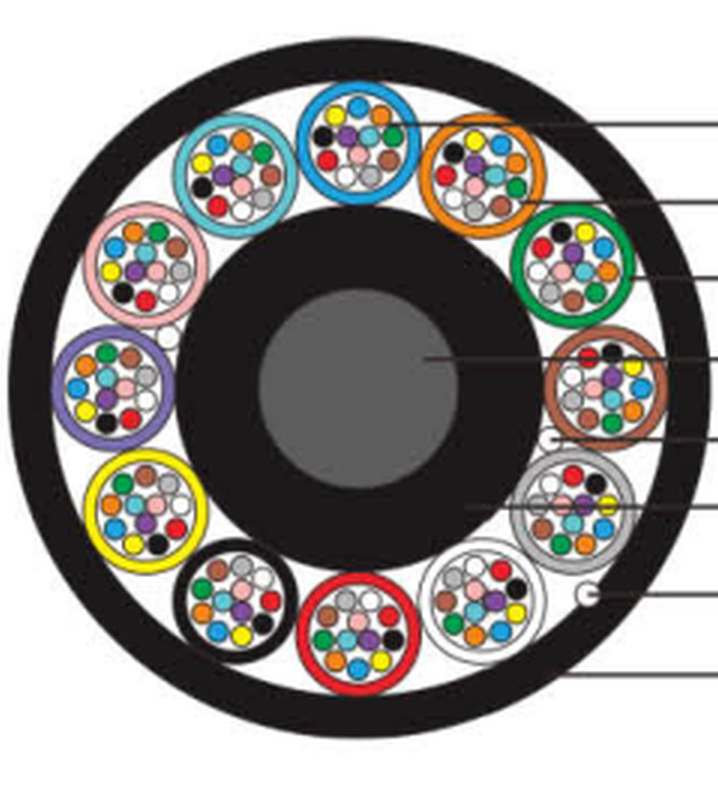
GYCFHTY Air-Blown Micro Cable
Built to be air-blown into 10/8 mm microduct after the duct is already in the ground. Start with the duct, add cable when subscribers arrive, and scale up to 288 fibers — without reopening the trench. Sections run 500–1,500 m per blow.
- Optical fiber
- Micro loose tubes
- Aramid yarn
- Water-blocking yarn
- Thin PE sheath
Cut-aways are illustrative of construction, not to scale. Typical test values are subject to project specification; full parameter tables are available on request.
Which cable for which route
| ADSS | ASU (0+3) | GYXTC8S | GYCFHTY | |
|---|---|---|---|---|
| Standard | IEC 60794-4 | IEC 60794-4 | IEC 60794-3 | IEC 60794-5 |
| Installation | Self-supporting aerial | Self-supporting (short span) | Figure-8 aerial | Air-blown into microduct |
| Fiber count | 12–144 | 2–24 | 2–24 | 12–288 |
| Typical span | 100–400 m | 50–150 m | Pole to pole | 500–1,500 m per blow |
| Best for | Medium/long-span feeders | Light aerial drops | Cost-effective aerial access | Scalable duct networks |
Send us the span and fiber count
We will spec the cable, drum length and microduct match for your route.
Request a Quote